Thursday, November 19, 2009

Leaping coyote


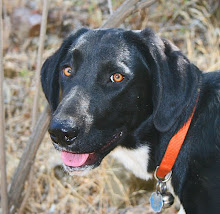
Camera traps occasionally get pictures of coyotes in flight, but usually not like this.

Wednesday, November 18, 2009

Gully bear


The bear came up the gully.


And paused to sniff.


It didn't take him (or her) long to realize the smell was coming from under the log or rock.


So he pulled it away, and found it wasn't edible.


When he encountered the camera, he sniffed but didn't bother it.

Then he continued up the gully and was gone.

Tuesday, November 17, 2009

Coyote beautiful


Whoever came up with "coyote ugly" never saw this aristocratic face.

Monday, November 16, 2009

Message from Tigerland

"The mango tree in which I sat and photographed this tiger in 1971 was in the Ministerguthi nallah about 2 km from Bandipur village, where I had established my base camp."
AJT Johnsingh


Drudgery makes the mind fly.

Tedious homeowner rituals send my thoughts sailing, and often they settle somewhere East of Suez to dwell on old friends and places, once so familiar, now far away and changed by time.

A recent message from A.J.T. Johnsingh, who has been traipsing through Indian jungles since boyhood -- reassured me that this old friend still lives an adventurous life.


AJT Johnsingh in Eravikulum National Park, Kerala, India


He shared these photos and wrote, "On 4th November early in the morning I was walking in Sigur Range (east of Mudumalai Wildlife Sanctuary) with four colleagues along a path that parallels the Moyar river.

"Lying and facing away, as we found her."


"We saw a tigress resting on the path about 20 m away, and stopped to observe and photograph."


"She became suspicious of our presence and was about to stand up."


"She had two cubs about the size of domestic cats that were playing behind a bush."


"Standing and growling at us before bounding away"


"When the tigress growled at us, the cubs in confusion almost ran towards us."

Seems we both still get our jollies getting surprises in the woods.

Johnsingh has logged years in the jungle studying large Indian mammals, has encountered elephants, gaur and tigers at close range, and owes his survival to keen senses, quick reflexes, and good jungle lore.

The young post-doctoral fellow who studied radio-telemetry at the National Zoo's Conservation & Research Center in the late 1970s grew into a senior wildlifer and an icon of jungle savvy admired by the younger generation.

We were both devotees of Jim Corbett's books about life in the Indian jungles, and when Johnsingh finished his postdoc I confessed that someday I wanted to see Corbett's old haunts -- and trek the Rudraprayag pilgrim trail together, where the famous man-eating leopard snatched sleepers from a crowded waystation without detection.

Johnsingh welcomed the prospect, but I never found the time to break free.

The good news is that my friend did go to see Corbett's haunts, and wrote a book about his adventures -- On Jim Corbett's Trail and Other Tales from Tree Tops.

Readers of Corbett can't help but wonder what if anything remains of the intimate places he described so well.

Read Johnsingh's book and you'll find out.

Sunday, November 15, 2009

Old men and old machines


"I've got a log splitter that'll split 'em sideways."

Childhood friend and co-codger Paul was waxing bragadocious about his Lickity-Log-Splitter -- the first of its kind and according to Paul, the Cadillac of log splitters.


Clayton Brukner patented the Lickity Log Splitter, with its stationary wedge and hydraulic platen, in 1959 when he was head of the Waco Aircraft Company of Troy, Ohio.

Brukner's mechanical inclination and production smarts came from a childhood of wandering around his daddy's workplace -- farm equipment factories in the midwest.

A self taught mechanical engineer, he drifted from thresher construction to aircraft assembly, and after WWI founded the Advance Aircraft Company with his friend Elwood James Junkin.

Brukner wrote that "My aircraft engineering background taught me to employ properly heat treated steels in the design of the machine (i.e., the Lickity Log Splitter), with the result that a machine weighing slightly over 500 lbs. is capable of a 36,000 lb. force if you can log that will require it."

Last Thursday Paul came rolling in with the Lickity Log Splitter on his flat bed trailer, and it looked more like a piece of wreckage with paint-eczema than a Cadillac.


The old dinosaur needed a snort of ether to fire up, but my how it worked!

It was soon splitting stumps with a terrible roaring vengeance.

"Don't put your hands on the ends." cautioned Paul as I dropped a stump onto the rail.

"A laborer lost his hand between the wedge and a log."

The din of machinery sounds like boots and saddles to tinkerers, and in no time neighbor Richard came putting down the driveway on his own antique, a vintage Honda 90 trail bike.

It was good timing, because we soon discovered that most of the stumps were 3 inches longer than Lickity Splitter's throat.

No amount of sledging made them fit.

Paul removed the steel stop that backed the wedge.

"It needs to be 3 and a quarter inches shorter."

Richard carried it off on his motorbike with Fred in tow.

So where did Paul find his yellow relic?

It was in a weedy lot in Carmel, California, an eyesore to some but a clear statement about Yankee thrift.

It wasn't for sale, and it didn't work, but the owner didn't mind chatting.

The splitter had seen many good years, and when the state widened Route 1 ("the coast highway") in the 70s, they felled the old eucalyptus aisle, and the Likity Splitter reduced a lot of very big stumps to firewood.

Paul finally talked the owner into parting with the machine, hauled it to Scotts Valley, and got it working, though he still laments the $100 dollars he paid for a new gas tank.

"I just didn't want to fool around making one out of parts."

When Richard came down the driveway he delivered the original part intact and a new and shorter wedge stop he had just welded from his own scrap.

"I didn't want to cut the original piece, so now you have two."

We were back in business.

Twenty-four hours later we had split and stacked a cord and a half of black oak.

Codgers can be pretty helpful when the work is done with big old machines.


Thursday, November 12, 2009

Gully cams -- a self portrait

Leaving with high hope, an unintentional self portrait.


Self portraits are inevitable when your controller's dip switches are set to shoot around the clock. 

(It doesn't happen when the camera is set to take night photos -- unless you work at night.)

So, unless you sneak away or creep up to your camera trap there's a good chance it will take your picture.

I regard my own self portraits as collateral damage and usually delete them, but this one of Craig retreating from set 301 almost has painterly qualities. 

As he walked away the camera took a sequence of 14 pictures, and this one just stood out.


Wednesday, November 11, 2009

Gully Cams


A Western screech owl perches near the camera 
but at the edge of the frame where there was no eye shine.


Unless there's a visible bait, sound lure, or water you don't expect owls to come to camera traps. 

Craig set a couple of cameras in or near gullies, which many mammals use as travel lanes.  

He used a punctured can of mackerel under a rock as bait, and a couple of scent lures, none of which should attract owls.

The surprise was that an owl visited each camera. 
 

Western screech owl faces a gully camera. Picture was cropped, 
but bird was close to the center of the frame, thus the eye shine.


You can't rule out the possibility that they were attracted to rodents attracted to the bait. 


Second photo of the owl, after retreating.